Export to Slack
Introduction
Send scheduled reports and dashboards to your Slack workspace so your team stays in touch with the latest data and can start discussing questions instantly from Slack.
Prerequisite
Your workspace must be connected to Slack first. See Slack integration for the one-time setup.
Set up a Slack schedule
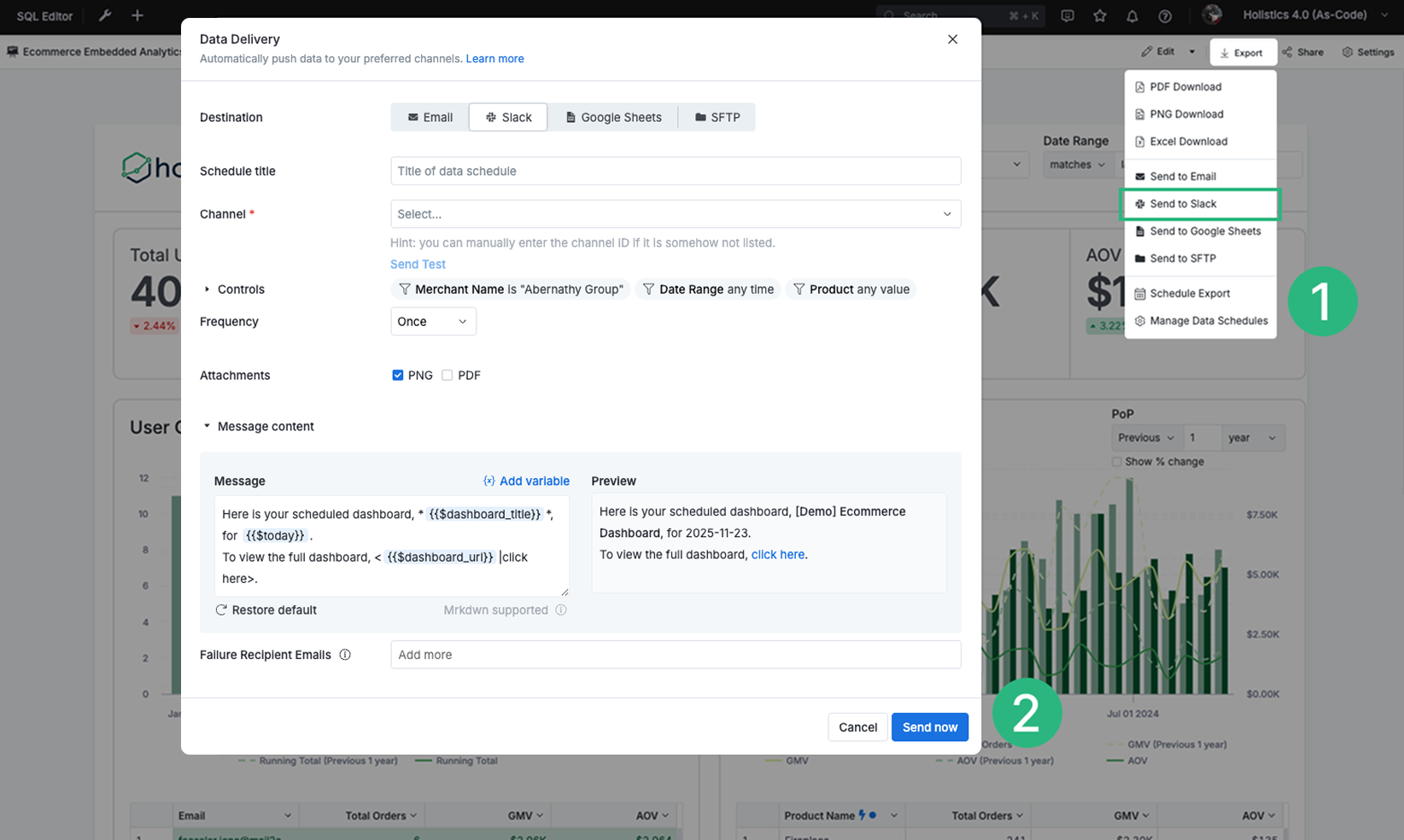
To set a Slack schedule for a dashboard, in the dashboard view page, click on Export > Send to Slack:
You'll see the following form:
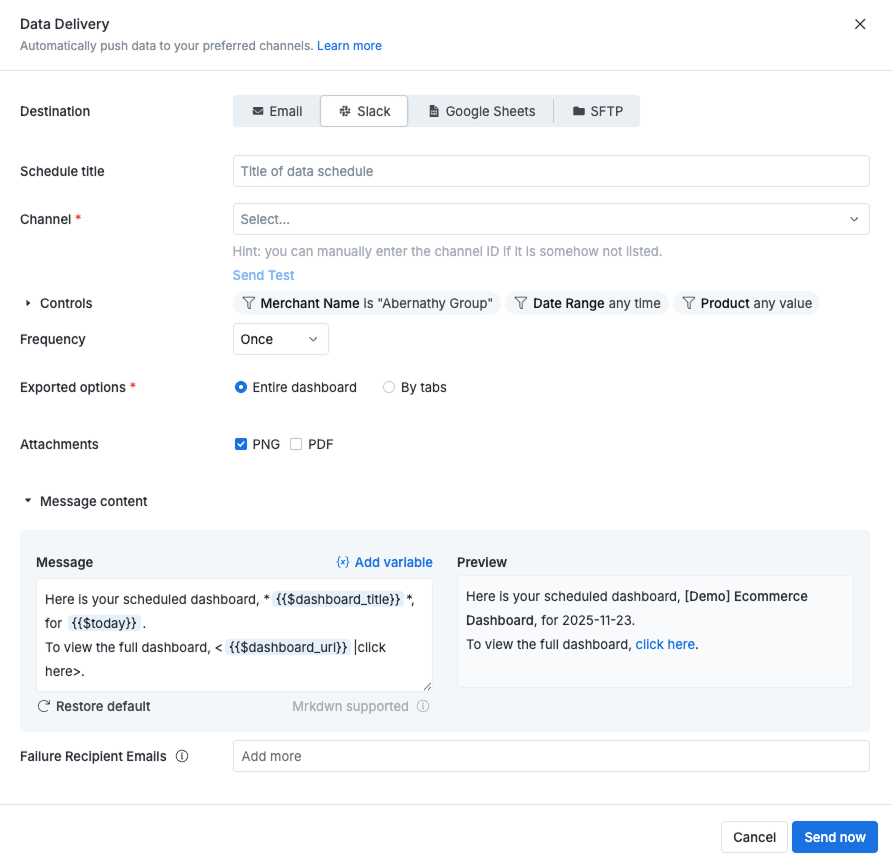
- Channels: Choose the public channels you want to send to. For private channels, please manually type the channel name: e.g.
#top_secret - Controls (optional): Customize dashboard controls before sending schedules. You can adjust Filters, Period Comparison, and Date Drill.
- Changes made here will not affect the main dashboard.
- You can only modify existing controls. New controls cannot be created.
- Frequency: Set the schedule interval (e.g., every X hours, daily, weekly, monthly, etc.).
- Exported options: Choose to export the entire dashboard or individual tabs (if the dashboard has multiple tabs).
- Attachments (optional): Attach dashboards as PNG or PDF formats.
- Message content: You can customize Slack message using Slack markup and dynamic variables like
{{$dashboard_title}},{{$today}}, and more. See Dynamic Variable Support for details. - Failure Recipient Email (optional): A comma-separated list of email addresses to receive notifications when the Slack schedule fails to deliver, in addition to the schedule creator and the report/dashboard creator. Learn more in Notify Delivery Failures.
Manage Slack schedules
Similar to Email, you can track all of your Slack Schedule from an individual dashboard, or from the global Schedules Management page. Refer to this section for more details.
Related
- Data freshness: how Holistics handles freshness for scheduled exports.
- Report storage and authorizations: storage limits, link expiry, and managing Slack authorizations across your team.